Monstera
Oceana
Oceana is a distinctive Monstera deliciosa known for its rippled edges, naturally contorted leaves, and dense yellow to creamy-yellow variegation reminiscent of breaking ocean waves or sea foam. Each leaf develops a unique shape and pattern, making every plant visually different. As the plant matures, its leaves develop characteristic splits and fenestrations while retaining their signature rippled form.
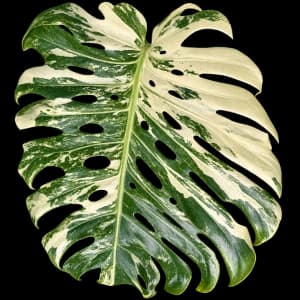
Monstera deliciosa ‘Oceana’ is a distinctive Monstera form whose beauty comes from the fact that its leaves do not follow a perfectly uniform shape. Instead, each leaf can develop with rippled margins, contorted growth and busy yellow to creamy-yellow variegation over a dark green background. The combination creates a visual impression of breaking waves or foam moving across the surface of the ocean.
What Makes Monstera Oceana Special?
Oceana is more than a Monstera with attractive variegation. Its most interesting characteristic is the way leaf morphology and coloration vary together from one leaf to another. The Aroid Cultivar Registry describes the leaves as rippled and contorted, with every leaf developing differently. The variegation is also particularly busy, ranging from yellow to creamy yellow and creating a wave-like or foamy appearance.
Oceana is registered as a sport of Monstera deliciosa. It originated from seed-grown plants raised by Michael D’Andrea and was named by Logan Conley. The cultivar was released in 2022 and is currently listed as “Accepted” by the Aroid Cultivar Registry, although it is not yet marked as “Established” and the nomenclatural publication is still pending.
No Two Leaves Are Exactly the Same
This may be the most fascinating part of growing Oceana. Rather than producing a perfectly predictable leaf shape, the plant can change its expression from one new leaf to the next. One leaf may have a gentle ripple, while another may be more strongly contorted, and the distribution of yellow and cream variegation can also change.
This does not necessarily mean the plant is growing abnormally. Variation between leaves is part of what makes Oceana distinctive. The Aroid Cultivar Registry notes that propagated plants retain the cultivar's general growth characteristics while individual leaves continue to develop their own shapes.
Yellow Variegation Like Layers of Ocean Waves
Oceana typically combines a dark green base with yellow, pale yellow and creamy-yellow variegation. The colors do not always appear as simple large blocks. Instead, they can form layered markings, streaks, marbling and irregular areas across the leaf.
The name “Oceana” itself refers to this visual effect. The registered description explains that the variegated markings resemble ocean waves or foam on the surface of the sea. It also notes that the distinction between the different colors can become stronger with increased light.
Mature Leaves Keep Their Character
Oceana has growth characteristics similar to variegated large-form Monstera deliciosa. Its internodes can become closely stacked, the leaves progressively increase in size, and the plant can climb when given suitable support. As the plant matures, the leaves develop the cuts and perforations normally associated with Monstera deliciosa while retaining their rippled, contorted character.
For this reason, a young Oceana should not be judged from a single juvenile leaf. As the plant becomes larger, the combination of leaf size, fenestration and contorted growth can create a very different overall appearance.
Light for Monstera Oceana
Oceana does best in bright, indirect light. Good light supports healthy growth and can also help its colors become more visually distinct. The cultivar registry specifically notes that the distinction between the different variegated colors intensifies with more sunlight.
More light does not mean placing the plant under harsh direct sun. Areas of foliage with less chlorophyll can be more sensitive to intense sunlight. A bright position near a window with filtered or diffused light is generally a safer choice.
Soil and Root Health
For a large-leaved, climbing Monstera like Oceana, a healthy root system provides the foundation for consistent new growth. The growing medium should be airy and well-draining while still holding a moderate amount of moisture.
A Monstera mix can include bark, perlite, coco fiber and other lightweight organic materials. The goal is not to keep the roots constantly wet, but to create an environment where they have access to both moisture and oxygen.
Watering
Oceana should not be watered according to a rigid calendar. Instead, check the growing medium and wait until the upper layer has begun to dry before watering again.
When watering, soak the medium thoroughly and allow excess water to drain completely from the bottom of the container. Keeping the root zone constantly saturated can reduce oxygen around the roots and increase the risk of root rot, while allowing the plant to become excessively dry can cause loss of leaf firmness and slower growth.
Humidity and Environment
A warm environment with stable humidity is well suited to Oceana. For a plant producing large new leaves, consistency is often more useful than trying to maintain one exact humidity percentage at all times.
If the plant is grown in an air-conditioned room, avoid placing it directly in the path of cold airflow. Very dry air or constantly changing temperatures can affect the appearance of the leaf margins and make the unfurling of new leaves less successful.
Helping Oceana Develop Beautiful Leaves
Oceana can climb when given the right conditions. A moss pole or sturdy support gives the plant a structure to grow against and can help encourage more mature foliage.
As the plant begins producing larger leaves, stable support also prevents the stem from becoming unstable or growing too unevenly. With a cultivar whose leaf morphology is already so distinctive, a healthy and well-structured plant allows the foliage to become the main visual feature.
Keeping the Leaves Looking Their Best
The rippled and contorted foliage is one of Oceana's most attractive characteristics, so keeping the leaves clean helps reveal these details. Gently wipe dust from the leaf surface and regularly inspect the undersides for early signs of pests.
Also pay attention to unusual yellowing, brown margins or a sudden slowdown in growth. These symptoms should be considered together with watering, root health, light and environmental conditions rather than treating the leaf symptom alone.
A Monstera for Collectors Who Love Variation
Monstera Oceana is special because it does not try to make every leaf look the same. Rippled margins, contorted leaf growth and yellow-to-creamy-yellow variegation create the feeling of waves moving across each new leaf.
The Aroid Cultivar Registry recognizes Oceana as a sport of Monstera deliciosa, and propagated plants retain its general growth characteristics. Yet the real appeal lies in the variation of individual leaves: one may be more rippled, another more colorful, and another may stand out simply because of its unusual shape.
That is what makes Oceana such an intriguing Monstera for collectors: not because every leaf is perfect, but because no leaf is ever completely identical to the one before it.
Reviews
No reviews yet. Be the first to share your experience.